





At FootMotion, we are dedicated to helping people move better, feel better and stay active through expert podiatry care.
We are a team of experienced podiatrists providing evidence-based assessment, diagnosis and treatment for a wide range of foot, ankle and lower limb conditions. Whether you are managing pain, recovering from injury or seeking preventative care, we deliver personalised treatment plans tailored to your needs and lifestyle.

Our Services
With a focus on innovation and patient well-being, we provide a range of services tailored to keep you on your feet.
General Podiatry | Gait Analysis | Diabetes Foot Protection | 3D Cadcam Orthoses | Footwear Assessment | Nail Bracing | Exercise Prescription | Chronic Disease Management | Balance Assessment
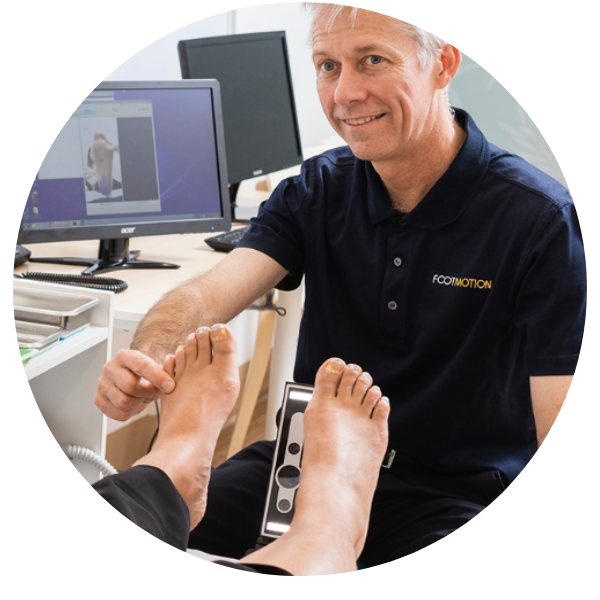
GENERAL PODIATRY
We offer a range of specialised treatments and care aimed at addressing various foot and ankle conditions.
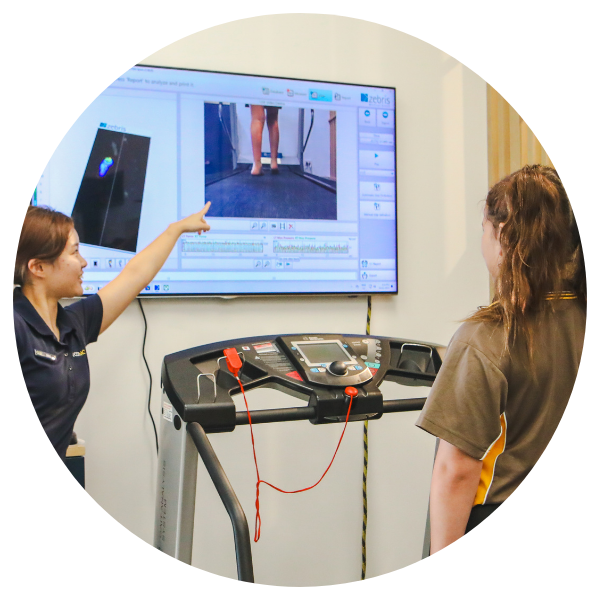
GAIT ANALYSIS
We uncover any abnormalities or inefficiencies in your walking or running pattern that could lead to pain or injury.
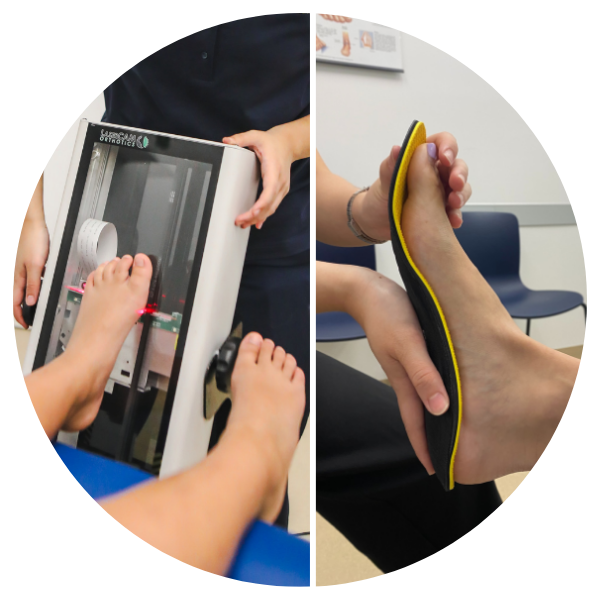
3D CADCAM ORTHOSES
We use cutting-edge technology to craft personalised orthoses thatoffer precise support for your unique foot biomechanics.
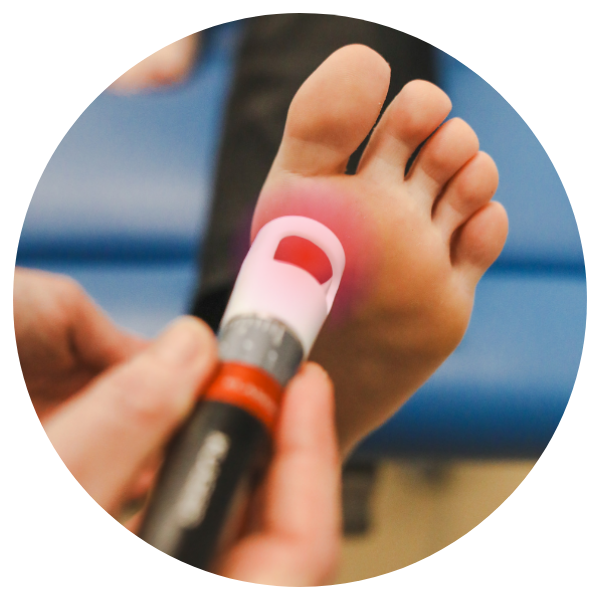
LASER TREATMENT
K-Laser therapy uses powerful lasers to treat pain and injuries, promoting faster healing and pain relief by stimulating cellular repair and reducing inflammation.
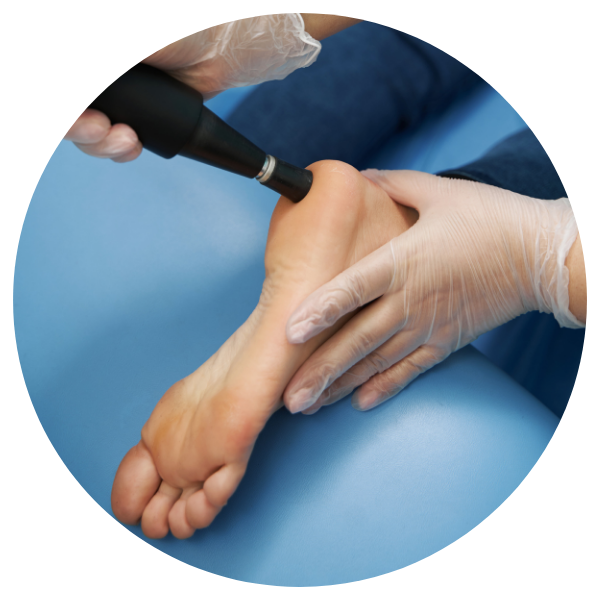
SHOCKWAVE THERAPY
Shockwave therapy uses acoustic waves to heal chronic foot pain like plantar fasciitis and Achilles tendonitis, improving mobility and promoting tissue regeneration.
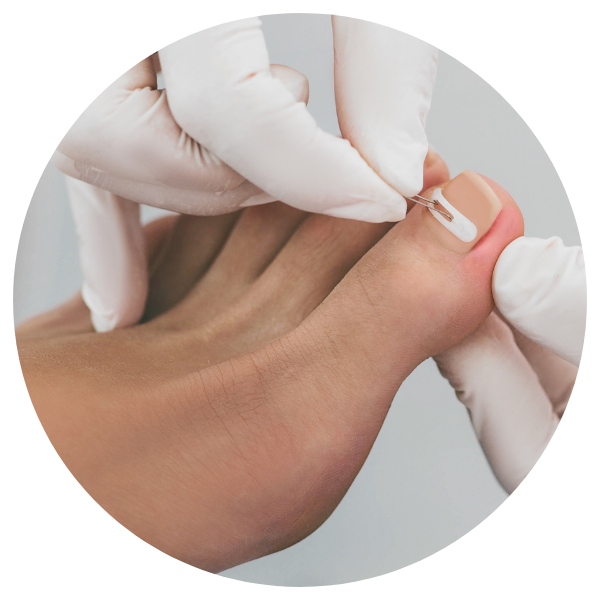
TOENAIL CORRECTION
State-of-the-art services like nail bracing and nail surgeries can help treat and permanently correct your toenail concerns.

WHAT WE DO
Our Approach
We take a patient-focused, evidence-based approach to podiatry care.
Every treatment begins with a thorough assessment of your symptoms, movement patterns and underlying causes. From there, we develop a clear and practical plan to help you achieve long-term improvement, not just short-term relief.
Our Goal
Our goal is simple: to help you stay active and comfortable for as long as possible.
We focus on treating the cause of the problem, not just the symptoms, and work with you to achieve lasting outcomes through personalised care and professional guidance.
Start Your Journey
If you are experiencing foot or lower limb pain, or simply want expert advice, our team is here to help.
Book an appointment with FootMotion Podiatry today and take the first step towards better movement and long-term foot health.
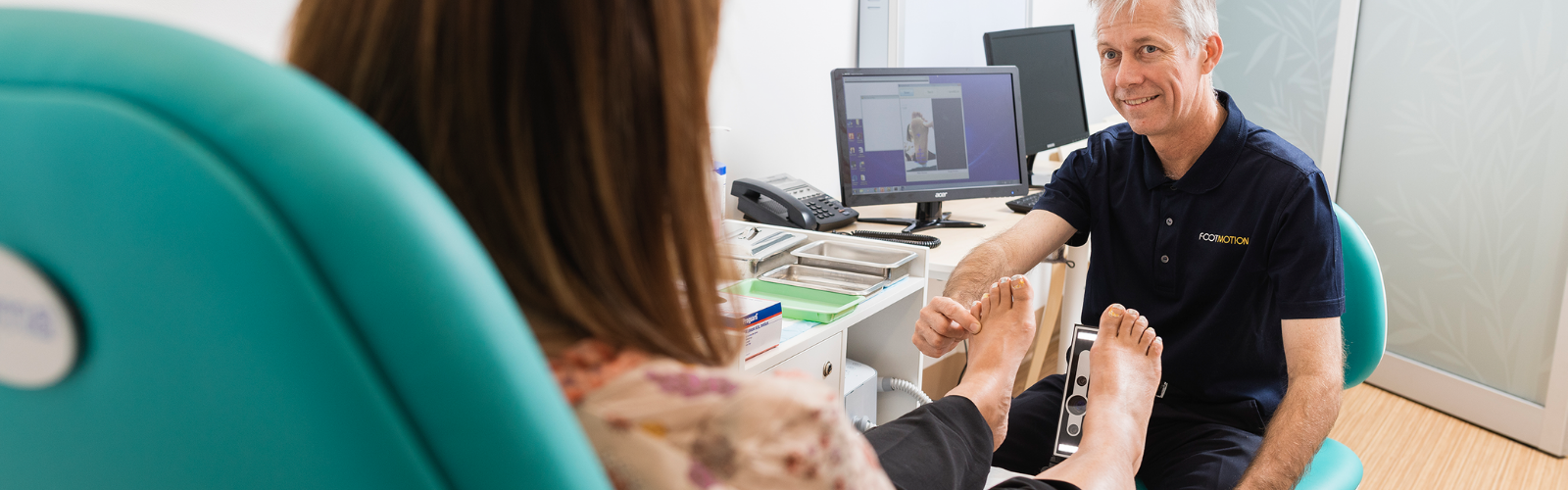
Conditions We treat
Whether you're dealing with ongoing foot pain, a sports injury, an ingrown toenail or simply discomfort when walking, our podiatrists are here to help. We regularly assess and treat a wide range of foot, ankle and lower limb conditions using evidence-based treatments tailored to your individual needs.
Explore the conditions below to learn more about common foot problems, their symptoms and how FootMotion Podiatry can help get you moving comfortably again.
 WHAT IS BURSITIS?
Bursitis occurs when a bursal sac is inflamed. Bursal sacs are located throughout the body.
They are fluid filled sacs that help to lubricate and reduce friction between two surfaces in the body, usually muscles and tendons as they glide over bony prominences.
In the foot there is only one naturally occurring bursal sac, which is located between the Achilles tendon and the heel bone (calcaneus).
However in response to the constant “micro-trauma” that our feet experience when we walk, the body creates bursal sacs to protect areas of the foot where trauma is occurring. If the trauma continues, the bursal sac (that has formed in order to protect the foot) becomes inflamed and bursitis develops.
Symptoms include:
- Pain, inflammation, redness and swelling
- Heat may emanate from the painful area
- Increased pain in the morning, or after being immobile for extended periods of time
CAUSES
Bursitis in the foot is usually secondary to other foot conditions. For example:Bunion or tailor’s bunion
People who have a bunion or tailor’s bunion will often have bursitis on the side of the foot where the bony prominence is located.
Hammertoe
In the presence of a hammertoe, the condition may form on the top of the toe as it rubs on shoes. Symptoms of this include tenderness, redness and swelling on the top of the affected toe. With too much pressure the bursitis can burst and become infected.
Ball of foot pain
HOW IS IT TREATED?
Because it is often secondary to other foot conditions, it is important that treatment addresses any underlying foot condition (such as bunion deformity, hammertoe).
Additional treatment to relieve the symptoms of bursitis includes:
- Anti-inflammatory medication
- Icing the area
- Orthotics to redistribute body weight through the foot and take pressure off the painful area
- Footwear advice
 WHAT ARE CORNS AND CALLUSES?
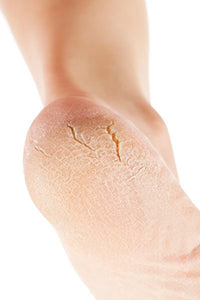
A corn is a more focal area of thick skin which has caused a cone shaped plug of skin that presses down on to sensitive soft tissue underneath the skin. The thicker and bigger they get, the more painful they can become. Corns can also occur anywhere on the foot but are particularly common around bony prominences such as toe joints and the joints in the forefoot. They may be round, slightly raised and may too feel rough, but look slightly darker than the callus. They can also occur between the toes, where they may take on a more rubbery appearance due to excessive moisture between the toes.
According to one of the largest research studies in this area, nearly one in 5 employees in a workplace setting had corns or callouses under the forefoot [1]. Assessment of 1000 podiatry patients attending a university clinic found that forefoot corns and callouses were more common in women, were more often painful as people became older and were most common under the heads of the first metatarsal (21%), the second metatarsal (29.8%) and third metatarsal (12%). [1] In an Australian study of older adults, 60% had at least one callous or corn beneath their feet.[2]
It is important to determine if your skin problem is a corn or callus or if it could be a plantar wart, as the treatments will be different in each case.
WHAT CAUSES CORNS AND CALLUSES?
Corns and calluses form usually in response to too much pressure, arising from prominent joints or from too much rubbing or friction. This can be caused by:
- Poor fitting or non-cushioned footwear
- Foot deformities such as bunions, hammer toe and claw toes
- Pronated feet that move too much within shoes
- High-arched feet with high forces at the forefoot and heel
- Older feet where the skin is less elastic and there is less fat pad to provide cushioning excessive weight
Corns and calluses can also be due to conditions such as psoriasis and rheumatoid arthritis. Care must be taken if you develop corns and callus and also have diabetes as they can lead to development of serious complications such as foot ulcers. People with diabetes should have regular foot assessments by podiatrists.
At FootMotion, we use our extensive clinical experience and state-of the-art technology to properly diagnose your skin condition, carry out a thorough vascular and neurological examination to accurately assess your foot health and create an evidence-based treatment plan to effectively manage your condition.
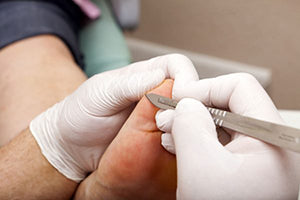 HOW CAN CORNS AND CALLUSES BE TREATED?
Treatment for corns and callus should be aimed at both relieving your symptoms by removing the thick skin as well as reducing the excessive pressure or friction causing them in the first place.
Removing your corns and callus involves careful debridement using a sterile scalpel to gently remove the thick skin. This process is normally quite painless as the tissue being removed has no sensation. The area would then be smoothed using a file or sanding instrument. In some cases, your podiatrist may use chemicals called caustics or keratolytics to help remove the thickened skin. You will also be given advice on self-care using appropriate creams, padding and filing, to help prevent or manage the thickening of the skin.
While ever there is still too much pressure or friction, the corns and calluses will likely continue. That’s why your treatment plan at Footmotion may include:
- Prescription of supportive, well-cushioned footwear that is fitting well
- Shoe padding to offload specific areas of high pressure
- Arch supports or prescription orthoses to improve function and reduce pressure and friction
In many cases these measures may stop the corns and calluses completely but sometimes the problems are severe enough that the goal is to slow down the process, reduce/remove the pain and lengthen the time between treatments.
 WHAT ARE BUNIONS?
Bunions - seen on the big toe Bunions are boney bumps that develop on the side of your foot just behind your big toe. The bump is caused by the alignment of the bones changing, with the big toe leaning over closer to the second toe, which forces the joint to shift outwards, making it more prominent. The medical term for bunions is hallux valgus (or HV). A similar bump can also develop on the other side of your foot behind the little toe – this is called a bunionette.
Bunions occur in around 23% of adults aged between 18 and 651, with women over two times more likely to develop them than men. This increases to as many as 35% in people older than 65 years. Children and teenagers are also susceptible to bunions (8%). It is vital to identify and manage bunions early, as the condition is progressive and the bunions will generally get worse with time.
Pain from bunions can be due to skin and soft tissue irritation and inflammation, both at site of the bunion as well as in other toes. As the bunion progresses though, pain can be more severe and cause symptoms in multiple foot joints as they become more damaged.
Aside from problems associated with finding comfortable shoes, other areas of your feet and legs can be affected, as well as your balance and the way you walk. Studies have also demonstrated that bunions can increase falls risks in older people. WHAT CAUSES BUNIONS?
The realignment of bones in the foot cause bunions Bunions form due to an abnormal pull of the muscles around an unstable joint. Research suggests that the shape and position of certain bones in your feet may leave you more susceptible to bunions. In particular, the shape of the 1st metatarsal and the length of the first metatarsal bone seem to be associated with developing this condition.
It is also thought that the condition may be hereditary. It has previously been thought that poor footwear (including high heels) and flat feet may be causes. Conditions such as Rheumatoid Arthritis and other connective tissue disorders also appear to increase your risk of developing bunions. Conditions such as gout and hallux limitus can also cause pain and swelling of the big toe joint. In our clinic we see that the way people walk can also be a factor. When the foot rolls in or ‘pronates; late in the walking cycle, the big toe may experience high pressures and be pushed out of alignment.
HOW CAN BUNIONS BE TREATED?
Early identification and management will help to reduce the amount of deformity caused. At Footmotion, our highly skilled Podiatrists will thoroughly assess the contributing factors. This will include assessing the extent of the deformity, muscle strength around the joint, the way you walk (may involve a biomechanical examination and computerised gait analysis) and checking your footwear. A comprehensive management programme may include:
- Supportive, well-fitting footwear for work, sport or leisure
- Exercises to stretch and strengthen the muscles around the joint
- Protective padding, including customised silicon devices to wear in shoes
- Braces and splints that are worn at night
- Arch supports or prescription orthoses for foot support and correction of walking patterns
- Coordinating care with other health professionals as required, for example referral for xrays if needed
In our experience, most people can get relief of the pain quickly. Contact us today to book your appointment. At your visit, be sure to bring examples of your work, sports and leisure shoes so the podiatrist can give you the right advice straight away.
1. Nix et al (2010)
2. Nix et al (2012)
 WHAT IS PLANTAR FASCIITIS?
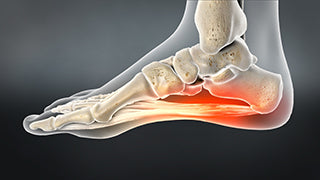
Plantar Fasciitis (or fasciosis) is one of the most common causes of foot pain, with 1 in 10 of us experiencing it at least once in our lifetime. It involves pain at the heel near the origin of the plantar fascia, a tight connective tissue band that runs from the calcaneus (heel bone) to the ball of the foot. Sometimes the pain can be located towards the middle of the arch.
Plantar Fasciitis is a degenerative condition characterised by thickening of the fascia and sometimes heel spurs.
Most people report heel pain first thing in the morning or after periods of rest that improves with a little walking. It can also be brought on if you are standing for long periods or with exercise.
WHAT CAUSES PLANTAR FASCIITIS?
You may develop plantar fasciitis if you have:
- Flat or pronated feet
- High arch feet
- Excessive weight
- Non-supportive footwear
- Prolonged standing/walking occupations
- Tight Achilles tendon and foot muscles
- Excessive running or exercise
- Pregnancy
- Some inflammatory conditions
At FootMotion, we use our extensive clinical experience and state-of the-art technology to properly diagnose your foot pain, carry out a biomechanical assessment to accurately assess your foot function and create an evidence-based treatment plan to effectively manage your condition.
HOW CAN PLANTAR FASCIITIS BE TREATED?
Whilst Plantar Fasciitis can be self-limiting and settle within 12-18 months, the pain can be debilitating, limiting your activity. Treatment is often required to ease your pain and prevent recurrence.
At FootMotion Podiatry we rule out other causes of heel pain then customise a treatment programme for you that would include a combination of the following:
- Icing, massage and rest
- Stretching and strengthening exercises
- Strapping
- Supportive, well-cushioned footwear
- Arch supports or prescription orthoses
2. Landorf, KB, McMillan, AM, Menz, HB 2013, Plantar heel pain: an update of its aetiology and diagnosis, Journal of Foot and Ankle Research, vol. 6 Suppl. 1 p. 18.
3. Fink, BR 2012 Management of Plantar Fasciitis Evolving, The Journal of Musculoskeletal Medicine 29, pp.16-20
4. Nicholl, D 2009, Plantar fasciitis: Part 2: recommendations for best clinical practice for the evaluation and treatment of plantar fasciitis Podiatry Now vol. 12, no. 1, p. 13
 WHAT IS ARTHRITIS?
Arthritis is a general term used to describe any type of joint pain. It is usually associated with pain, stiffness, inflammation and joint damage.
There are many different types of arthritis, with the most common being Osteoarthritis and Rheumatoid Arthritis. Gout is also a form of arthritis. These three forms of arthritis account for 95% of arthritis cases in Australia. However there are around 100 different types of arthritis and they can affect any age group. Arthritis generally becomes more prevalent with age, particularly after the age of 45 years.[1]
Just about any joint in the body can be affected by arthritis, and with 33 joints in each foot, it isn’t surprising that arthritis in the feet is pretty common. In fact, about 1 in 6 older people had painful arthritis affecting their feet according to a recent study.[2]
Knees, hips and spine are also quite susceptible to developing arthritis. Being overweight places more stress on the bones and joints and has been shown to increase foot and lower limb pain in arthritis.
HOW IS ARTHRITIS TREATED?
Treatment for arthritis depends on the exact type of arthritis and the joints affected.
Generally speaking though, when treating arthritis associated with your feet and legs, treatment usually involves:
- Stretches and exercises to maintain joint mobility
- Supportive, well cushioned footwear, fitted well to protect painful joints
- Arch supports or prescription orthoses to stabilise the foot, reduce abnormal joint loading and help prevent deformity
- Advice for maintaining healthy lifestyle and reducing stress on the affected joints
1. AIHW, A snapshot of arthritis in Australia 2010, 2010, Australian Institute of Health and Welfare Canberra.
2. Roddy, E., et al., The population prevalence of symptomatic radiographic foot osteoarthritis in community-dwelling older adults: cross-sectional findings from the clinical assessment study of the foot. Annals Of The Rheumatic Diseases, 2015. 74(1): p. 156-163.
 WHAT ARE PLANTAR WARTS?
Plantar Warts (or verrucae) are warts that occur on the bottom of your feet. They generally appear as hard lumps in the skin with thick skin surrounding it. They are often mistaken for corns but can be differentiated by the appearance of small black dots in the middle of the wart and with the lack of skin striations (skin lines on the feet, like fingerprint lines) through the wart.
Plantar Warts can occur at any age but are particularly common in school-aged children. [1] They are contagious and can be spread when using communal facilities such as change rooms and showers.
Plantar Warts are sometimes painful, depending on their location on your foot and how big or how deep they are. The decision to treat them is usually dependent on whether they are painful.
WHAT CAUSES PLANTAR WARTS?
Plantar warts, like any wart, are caused by the Human Papilloma Virus (HPV). There are over 100 different strains of HPV, with only a few causing warts on your feet. The virus enters the body through a small break in the skin surface [2], however, the virus can remain dormant in the body and become evident months, if not years later.
Pain associated with warts is due to the pressure applied to the soft tissue underneath the wart, as the wart and surrounding callus gets thicker.
HOW CAN PLANTAR WARTS BE TREATED?
Often warts will resolve on their own without any treatment, but this may take years to do so. Treatment options for Plantar Warts are quite varied. They range from doing nothing at all, to home remedies such as ‘over the counter’ wart treatments and duct tape, to more advanced treatments such as salicylic acid and cryotherapy (freezing). Surgical removal is also an option. Whatever the treatment, care must be taken to avoid scarring which can sometimes lead to long term painful callus formation.
Research has suggested the best form of treatment for warts is the use of salicylic acid and/or cryotherapy.
Salicylic acid, as the name suggests, is an acid which softens the wart tissue, and with the aid of manual removal of dead skin, will gradually reduce the wart tissue. It is also thought that partially-damaged cells expose the immune system to HPV to stimulate your body’s immune system into reacting to the wart too.[1] Care must be taken only to apply the acid to the wart tissue, hence this is often done by your Podiatrist or doctor who may also mask the surrounding area with tape or dressings to protect the healthy skin.
Cryotherapy utilises liquid nitrogen to freeze the wart tissue, and like salicylic acid, will eventually decrease the wart size as well as stimulating your body’s immune system to respond. It can be painful and also requires care taken to ensure only wart tissue is treated.
Silver nitrate has also been shown to have some good results for treating warts. It is also a topical treatment which is painted on to the wart.
All of these non-surgical wart treatments require several applications, and may take weeks or months to resolve, so patience and persistence is key. As they all cause tissue damage, these treatments must be used with great caution in people who have poor circulation or sensation e.g. diabetes or those who have poor immunity. In some of these cases no treatment may be the best option.
At FootMotion, we use our extensive clinical experience and state-of the-art technology to properly diagnose your skin condition, carry out a thorough vascular and neurological examination to accurately assess your foot health and create an evidence-based treatment plan to effectively manage your condition.
WHAT IS HEEL PAIN?
Your heel bone (calcaneus) is the largest bone in your foot. It takes the bulk of the foot’s forces during heel strike when you are walking, leaving it prone to injury. There are many different conditions which cause of heel pain, including:
- Plantar fasciitis
- Heel spurs
- Achilles tendonitis
- Fractures
- Sever’s disease (in children)
- Plantarfibromatosis
- Nerve entrapments
WHAT CAUSES HEEL PAIN?
As mentioned above, there are several different conditions that can cause your heel pain. Other contributing factors include:
- Flat feet
- High arch feet
- Excessive weight
- Standing or walking for prolonged periods on hard surfaces
- Non-supportive footwear
- Tight Achilles tendon and foot muscles
- Some inflammatory conditions
 At FootMotion, we use our extensive clinical experience and state-of the-art technology to properly diagnose your foot pain, carry out a biomechanical assessment to accurately assess your foot function and create an evidence-based treatment plan to effectively manage your condition.
HOW CAN HEEL PAIN BE TREATED?
Treating your pain involves making a clear diagnosis of the cause of your pain and then developing a tailored treatment programme to effectively reduce your pain.
This may include:
- Icing, massage and rest
- Stretching and strengthening exercises
- Strapping
- Supportive, well-cushioned footwear
- Arch supports or prescription orthoses
 Fractured Toes are quite common, and can result from a direct blow to the foot, for example, the accidentally kicking something hard or dropping a heavy object on your toes.
They can also result from the overuse and repetitive stress that comes with participating in high-impact sports like running and rugby. Toe and forefoot fractures often result from trauma or direct injury to the bone.
Fractures can also develop after repetitive activity, rather than a single injury. This is called a “stress fracture.” Fractures may either be “non-displaced,” where the bone is cracked but the ends of the bone are together, or “displaced,” where the end of the broken bones have partially or completely separated.
Although fracturing a bone in your toe or forefoot can be quite painful, it rarely requires surgery. In most cases, a toe fracture will heal with rest and a change in footwear.
 WHAT IS AN INGROWN TOENAIL?
An ingrown nail is a common condition affecting the toes, most often the big toes. It occurs when the side or corner of the nail digs into the skin alongside your nail and causes pain and irritation with the potential for the skin to become inflamed and infected. An involuted (excessively curved) nail can cause similar problems with pain, inflammation and infection. The curved nail presses on the tissues of the nail bed or the sulci (grooves) along the edges of the nail plate or both.
WHAT CAUSES AN INGROWN NAIL?
The main causes of ingrown toenails include:
- Incorrect cutting of nails, such as cutting them too short, not cutting straight across to remove the sharp corner, or tearing or picking them
- Injuring your toe
- Wearing shoes that are too tight or short
- Having nails that naturally curve more than usual
- Pressure between the toes due to bunions or toe deformities
Left untreated, an ingrown toenail can become infected which may lead to deeper infection in the tissue and bones if it is neglected or in people who have certain medical conditions such as diabetes. Even if an ingrown toenail becomes infected and you are given antibiotics by your doctor, it is important to have the problematic section of nail is removed to allow the toe to heal and prevent its recurrence.
At FootMotion, we use our extensive clinical experience and state-of the-art technology to properly diagnose your skin and nail condition, carry out a thorough vascular and neurological examination to accurately assess their foot health and create an evidence-based treatment plan to effectively manage your condition.
HOW CAN AN INGROWN TOENAIL BE TREATED?
In many cases, the troublesome toenail can be conservatively managed by removing just the small section of the nail that is causing the problem. Antiseptics and in some cases antibiotics may be needed in the case of an infection. Our Podiatrists have techniques to minimise your discomfort while treating your ingrown toenail. In some cases, we can administer a local anaesthetic to temporarily numb the area being treated.
Surgical Intervention
When there are recurring ingrown toenails or if the ingrown toenail is severe, we may suggest surgery to permanently remove part of the nail that is causing the problems. This procedure, called a nail wedge resection, involves removing a small section along the edge of the nail, narrowing the nail width slightly. The nail root or ‘matrix’ is then cauterised with a chemical to prevent the regrowth of the nail. It is a relatively simple procedure, performed by our Podiatrists in our clinic rooms with strict infection control procedures followed. According to a large clinical study, this particular technique is very effective at correcting the problem permanently. [1] It does require a local anaesthetic, however you will be able to walk out of the clinic room and generally won’t require an extended time recovery time. Nail Bracing – a non-surgical intervention
Where a non-surgical correction is medically advisable or a personal preference, Footmotion Podiatry offers nail bracing as an effective alternative for nail surgery. Nail bracing can alleviate discomfort quickly and painlessly. As no local anaesthetic is used nail bracing is suitable for children and people with diabetes. Where the treatment aim is to re-shape a curved nail plate the bracing may be removed and reapplied at regular intervals over a period between 3 to 12 months.
GENERAL ADVICE AND HOME CARE
To help avoid the ingrown toenails in future, you will be shown ways to reduce the risk of them returning. This may include:
- Advice on how to cut and care for your nails
- Footwear review and advice to ensure proper fit and support
- Ongoing nail care by our Podiatrists to help with difficult nail shapes
- Treatment for foot conditions such as bunions and toe deformities

TALK TO OUR FRIENDLY TEAM
3 Sherwood Rd, Toowong, QLD 4066
Call us today: (07) 3371 3300


FAQs
If you are eligible for the Chronic Disease Management Program (formerly known as the Enhanced Primary Care (EPC) Scheme) you will be able to pay the full consultation fee and receive a partial benefit from Medicare. Please discuss this program with your GP who will determine if you are eligible.
No, for the majority of podiatry related problems you do not require a doctor’s referral. Simply make an appointment to see one of our Podiatrists. A current doctor’s referral will be required if you are eligible to have your treatment covered by WorkCover, The Department of Veterans’ Affairs (DVA), or The Chronic Disease ManagementScheme through Medicare (formerly known as Enhanced Primary Care (EPC) Scheme).
Podiatry services are usually covered by Private Health Insurance Extras but you will need to check the details of your individual policy with your health fund. Throughout your treatment, we can provide you with individual item numbers to help you check with your fund. We have on-the-spot health fund claiming available at the practice.
Our street address is 3 Sherwood Road, Toowong. FootMotion is conveniently located in front of the Toowong Station, next to Toowong Village. You can walk up the stairs from Nando's to find us! Podiatry is on the right hand side next to our retail store.
Parking can be found in the surrounding area.
At your first appointment, it’s helpful to bring a selection of your current footwear, particularly any that you are having problems with. Orthotics, if you have any. Any x-rays or scans you may have of your feet or legs. Comfortable clothing, as we may have you walking and moving around to examine your feet and legs.
Fees vary depending on the type of treatment required. Please call our clinic and we will be happy to discuss what costs may be involved depending on your particular needs.
The length of your appointment depends on the type of treatment you require. A first appointment usually takes 40 minutes. Arriving 10 minutes before this first appointment will also allow time to get your paperwork done so we can take you through promptly.